

- Why Consulates Scrutinise Self-Employed Applications More Closely
- Schengen Visa for Self-Employed UK: The Full Document Checklist
- Sole Traders: SA302s, Tax Year Overviews and Personal Accounts
- Limited Company Directors: What Counts as Your Income
- Freelancers and Contractors: Proving Irregular Income
- The Accountant’s Letter: What It Must Say
- No Accountant? What to Submit Instead
- Frequently Asked Questions
- Self-Employed and Short on Time? Get Your File Reviewed Before You Book
- About the Author: Tripzo
- Why Consulates Scrutinise Self-Employed Applications More Closely
- Schengen Visa for Self-Employed UK: The Full Document Checklist
- Sole Traders: SA302s, Tax Year Overviews and Personal Accounts
- Limited Company Directors: What Counts as Your Income
- Freelancers and Contractors: Proving Irregular Income
- The Accountant’s Letter: What It Must Say
- No Accountant? What to Submit Instead
- Frequently Asked Questions
- Self-Employed and Short on Time? Get Your File Reviewed Before You Book
Getting a Schengen visa for self-employed UK applicants works the same as any other application, except the employment section. Instead of an employer letter and payslips, you prove your business is real, your income is regular, and you have reasons to come home. The core file is your SA302 and tax year overview (or company accounts), three months of business bank statements, and a recent letter from your accountant.
This guide to Schengen visa for self-employed UK applicants covers the full checklist, the differences between sole traders, directors and freelancers, and what to submit if you have no accountant. Tripzo LTD is a UK-registered visa consultancy, and the steps below are the ones we run through with self-employed clients on the phone.
Why Consulates Scrutinise Self-Employed Applications More Closely
An employed applicant hands over one letter and three payslips, and the consulate can ring the employer to check. A self-employed applicant has no HR department to call. That is the entire reason the bar feels higher.
The officer is really asking three questions. Is this business genuine? Is the income shown on the statements actually yours and regular?
And will this person return to the UK, where their livelihood is? Every document in a Schengen visa for self-employed UK application should answer one of those three.
In our experience, self-employed refusals almost never happen because someone is self-employed. They happen because the file tells a confusing story: personal and business money mixed in one account, a big unexplained deposit two weeks before the appointment, or a tax return that shows far less income than the statements suggest. Keep the story clean and the application is straightforward.
One honest limit: no agency can guarantee approval. What a good file does is remove the officer’s reasons to say no.
Schengen Visa for Self-Employed UK: The Full Document Checklist

A Schengen visa for self-employed UK file needs everything a standard applicant submits, plus the business layer. The table below is the version we run through with clients on the phone.
| Document | What it must show | Common mistake |
|---|---|---|
| Passport + UK residence | eVisa printout with share code | Expired share code |
| Application form + photo | Signed, dates match bookings | Dates drifting from itinerary |
| Travel insurance | €30,000, whole Schengen area | Cover ending before return |
| Flight + hotel bookings | Full stay covered | Gaps in accommodation |
| Personal bank statements | 3 months, steady balance | One big recent deposit |
| Business bank statements | 3 months, regular income | Mixing personal spending in |
| SA302 + tax year overview | Latest filed year | Screenshots instead of HMRC PDFs |
| Accountant letter | Dated within 1 month | Undated or vague letter |
| Cover letter | Trip purpose, dates, ties to UK | Generic template wording |
Two notes on the table. First, some consulates (France is explicit about this) accept a letter from your bank manager or solicitor instead of an accountant.
Second, “business bank statements” can be your business account or the account your business income lands in; what matters is that the income trail is visible and consistent. If you want the detail on what officers look for in the numbers, our bank balance guide walks through the per-country daily minimums.
Sole Traders: SA302s, Tax Year Overviews and Personal Accounts

Sole traders have the simplest business structure and, paradoxically, the document set people get most wrong. You do not have company accounts. Your proof is your Self Assessment record.
Download two documents from your HMRC personal tax account: the SA302 (tax calculation) and the tax year overview for the most recent filed year. For Schengen visa for self-employed UK sole traders, these two PDFs are non-negotiable.
These are the documents consulates actually want to see, not a spreadsheet you made yourself. Print the HMRC PDFs; screenshots of the portal get rejected at some centres.
Then add three months of statements for the account your trading income passes through. If you run everything through one personal account, that is fine, but make sure the income entries are identifiable. Regular client payments labelled clearly tell a better story than a single monthly transfer from “savings”.
Your cover letter should state plainly that you are a sole trader, what the business does, and how long you have traded. One paragraph is enough. Officers read hundreds of these; clarity beats length, and our cover letter guide has a structure that works for self-employed applicants specifically.
Limited Company Directors: What Counts as Your Income

Directors confuse consulates more than any other group, because the company’s money is not your money. A healthy company bank balance means nothing if you cannot show what you personally draw from it.
A Schengen visa for self-employed UK company directors must prove personal income, not just company health. Submit both sides of the picture.
Company side: certificate of incorporation from Companies House, latest filed accounts or confirmation statement, and three months of company bank statements. Personal side: three months of your personal statements showing salary and dividend payments landing, plus dividend vouchers or payslips matching those entries.
The accountant’s letter matters most for directors. It should confirm your role, your annual remuneration (salary plus dividends), and that the company is active and trading. An officer who sees £4,000 a month landing in your personal account with a letter confirming exactly that has nothing to question.
Watch the timing trap: if your most recent dividend was paid six months ago and nothing since, the income looks dead. Regular monthly drawings, even modest ones, read as a living business.
Freelancers and Contractors: Proving Irregular Income
Freelancers worry that irregular income looks suspicious. It does not, as long as the pattern is visible.
A designer paid £2,000, then £5,500, then £3,000 across three months is fine. What raises flags is income that appears from nowhere with no paper trail.
Stack your evidence. Current contracts or recent invoices showing ongoing work, client payment references on your statements, and your SA302 tying the year’s total together. If you work through an agency, a letter from the agency confirming your engagement works like an employer letter.
Contractors inside IR35 with payslips from an umbrella company are in the easiest position of all: submit it exactly like an employed applicant, umbrella payslips and all, and mention the arrangement in your cover letter so the officer is not left guessing.
One practical tip we give every freelancer: do not submit twelve months of statements “to be safe” unless asked. Three clean, consistent months beat a year of noise. If a specific consulate wants more, the checklist will say so.
The Accountant’s Letter: What It Must Say

The accountant’s letter is the closest thing self-employed applicants have to an employer letter, so it needs to do the same job in a few lines.
It must be on the accountant’s letterhead, dated within one month of your appointment, and signed. The letter should state: your name, the business name and nature of the trade, how long you have been a client, your role (sole trader, director, partner), and your annual income or drawings from the business. A sentence confirming the business is currently active and trading closes it out.
What it must not do is hedge. “To the best of our knowledge” and “the client informs us” weaken the letter.
A good accountant writes these regularly and knows the formula. If yours looks puzzled, show them this list.
France’s published guidance explicitly accepts alternatives: a letter from your solicitor, bank manager or local chamber of commerce confirming your professional activity works too. Useful if your accountant is slow and your appointment is next week.
No Accountant? What to Submit Instead
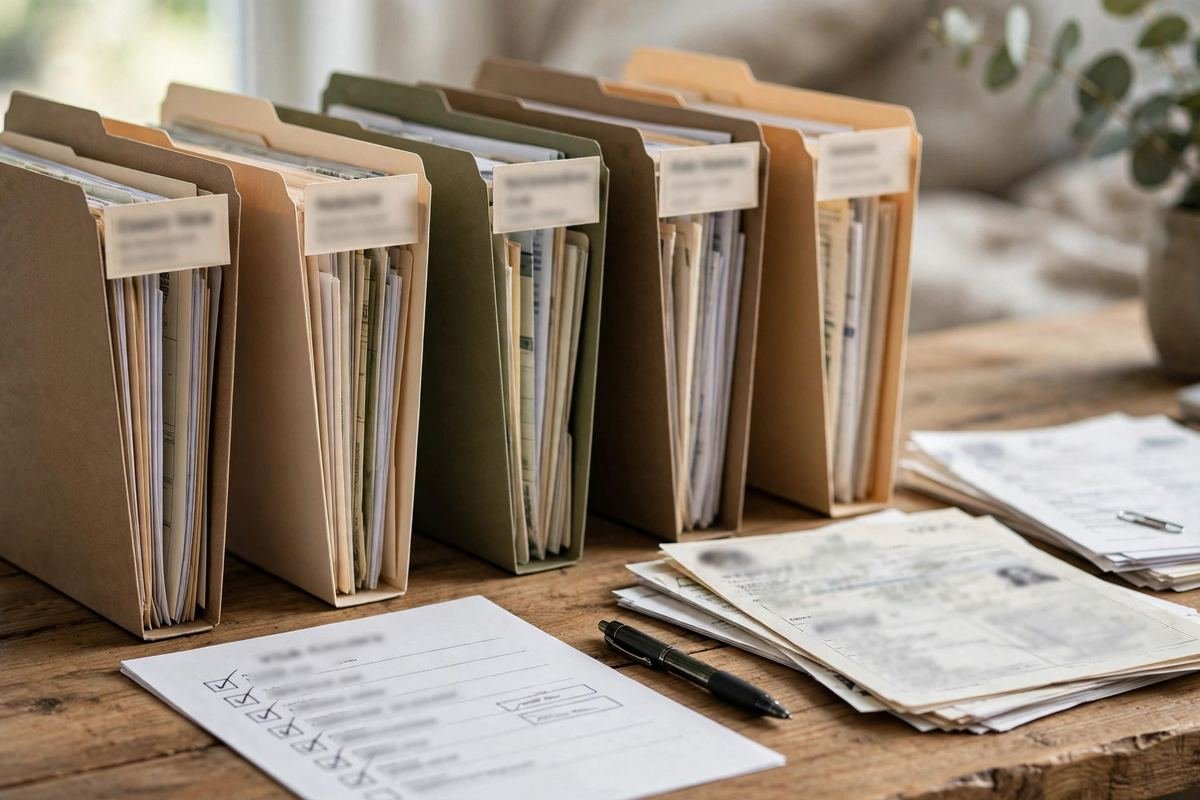
Plenty of sole traders and freelancers do their own books. Schengen visa for self-employed UK applicants without an accountant can still build a strong file; you just replace the accountant’s letter with other verifiable proof.
The strongest substitutes, in order: a letter from your bank manager confirming your self-employment and average annual income; your VAT registration certificate plus recent VAT returns if you are VAT-registered; your Companies House record and filed accounts if you run a limited company; and long-standing client contracts with payment history visible on your statements.
What does not substitute: a letter you wrote yourself, a reference from a friend, or printouts from your own invoicing software with nothing official behind them. The officer needs at least one document from an independent institution: HMRC, Companies House, your bank, or a professional body.
If you are newly self-employed (under a year), say so openly in your cover letter and lean on what you have: contracts, invoices paid, and statements showing the business building.
Officers see new businesses constantly; pretending to be established when you are not is what causes trouble. Still unsure which substitute fits your case? Our FAQ page answers the most common follow-ups.
Frequently Asked Questions
Can I get a Schengen visa if I am self-employed in the UK?
Yes. Self-employment is not a barrier to a Schengen visa for self-employed UK applicants; you simply submit business documents instead of an employer letter and payslips. The key items are your SA302 and tax year overview (or company accounts), three months of business bank statements, and a recent letter from your accountant, bank manager or solicitor.
How many months of bank statements do self-employed applicants need?
Three months is the standard across Schengen consulates, for both business and personal statements. They should be dated within one month of your appointment. A few consulates ask for six months in specific cases, so check your destination’s checklist.
What if my income varies month to month?
Variable income is normal for freelancers and contractors and does not cause refusals by itself. What matters is that the income is traceable: invoices or contracts matching the payments on your statements, and a tax return that ties the year together. Unexplained lump sums are the problem, not variation.
Do I need an accountant’s letter, or can I write my own?
A letter you write yourself carries no weight. Consulates want confirmation from an independent party: your accountant, bank manager, solicitor or chamber of commerce. France’s guidance explicitly lists these alternatives, and most consulates follow the same logic.
I just started my business three months ago. Should I wait?
Not necessarily. New businesses get visas every week.
Be upfront about it in your cover letter, and submit your contracts, paid invoices and the statements you have. Do not invent a longer trading history.
Does being a company director make the application harder?
Slightly, because you must prove what you personally draw from the company, not just that the company is healthy. Submit company documents plus personal statements showing your salary and dividends, with an accountant’s letter confirming your annual remuneration. Keep the two sides consistent.
Self-Employed and Short on Time? Get Your File Reviewed Before You Book
Schengen visa for self-employed UK files have more moving parts: SA302s, two sets of statements, the accountant letter, the dividend trail. One mismatch between them is the most common reason these applications stall.
Send us your draft file before your appointment and we will check every document against your consulate’s checklist, flag the gaps, and tell you exactly what to fix.
Get your self-employed file reviewed and walk into the centre knowing the numbers add up.
Editorial Verification Guarantee
Every guide published on Tripzo is cross referenced against sovereign European consular policies, VFS Global protocols, and the official Schengen Borders Code. We update instructions regularly to protect UK applicants from avoidable administrative refusals.
About the Author: James

Direct Support Line
Have an urgent question regarding your upcoming appointment date or document validity?