

How much bank balance for Schengen visa UK applications do you actually need? The honest answer: there is no single number.
Each Schengen country sets its own daily minimum, roughly €50 to €100 per person per day. Officers care far more about three months of steady statements than about one big closing balance.
Below are the per-country figures for 2026. You also get the red flags that trigger refusals, and worked examples in pounds so you can check your own position.
The Short Answer: The Per-Day Rule
Every Schengen country publishes a minimum daily amount you must be able to show. Think of it as the country’s estimate of what one person spends per day on food, local transport and incidentals.
Your total requirement is that daily figure multiplied by your trip length. It sits on top of your prepaid flights and hotels.
As a rule of thumb, budget €50 to €100 per person per day of available funds. France sits in the middle of that range. Spain sits near the top. Belgium is lower if you are staying with a host.
The exact figure depends on where you apply. You apply to the country where you spend the most nights, and that country’s number governs your file.
Two things catch people out. First, the money must be genuinely available to you, not just visible on the closing date.
That is the real answer to how much bank balance for Schengen visa UK applications: enough, held steadily, for the whole quarter.
Second, prepaid bookings do not reduce the daily figure in most countries. The minimum assumes you have already paid for flights and hotels separately.
How Much Bank Balance for Schengen Visa UK by Country (2026)
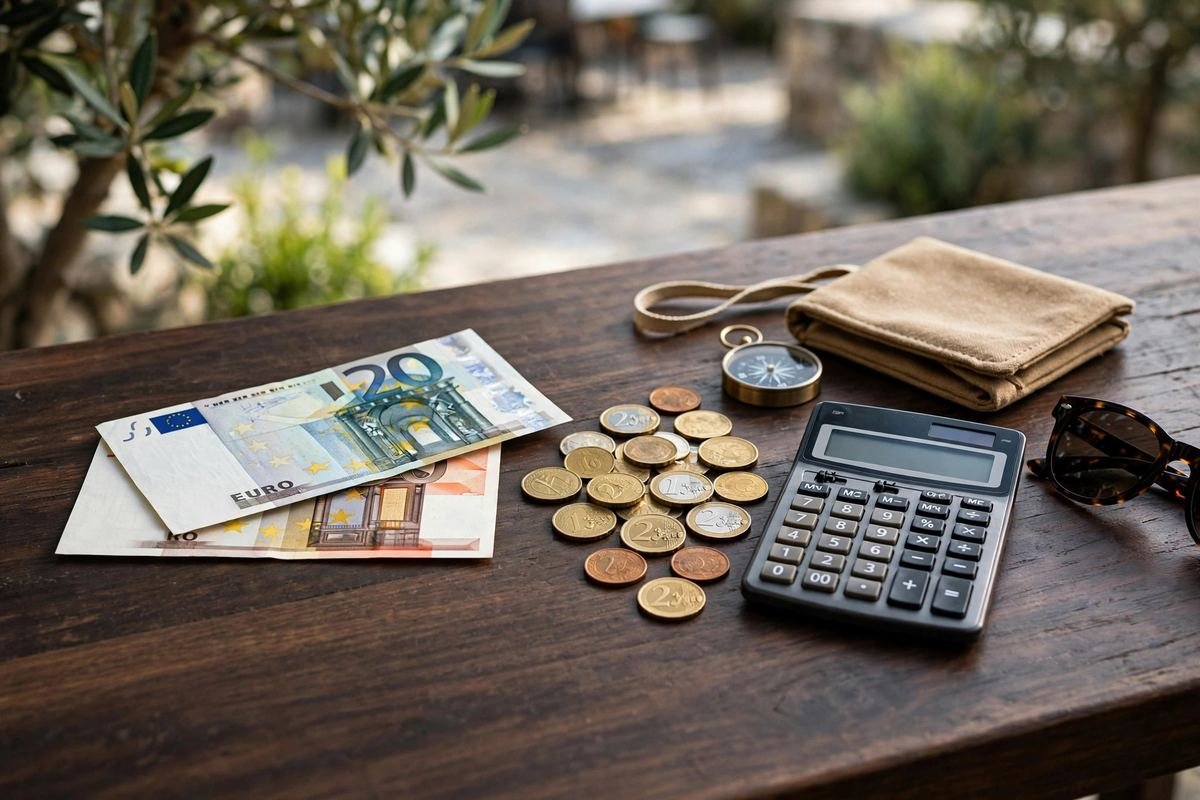
These are the widely applied reference figures. Consulates update them periodically. Treat them as the planning baseline and confirm on each country’s official Schengen guidance or the VFS/TLS/BLS page before you apply.
| Country | Daily minimum | Notes |
|---|---|---|
| France | €65 hotel; €120 no hotel | €32.50/day with host attestation |
| Spain | €113-€120/day | Min total ~€1,000 (IPREM index) |
| Italy | €60-€100/day | Sliding scale by trip length |
| Germany | ~€100/day | Practical guideline, no fixed law |
| Netherlands | €55/day | Set by Dutch IND |
| Belgium | €45 host; €95 hotel | Host needs formal declaration |
| Greece | ~€50/day | Min total ~€300 short stays |
| Portugal | €75 entry + €40/day | Entry amount plus daily rate |
A quick comparison makes the point. Ten days in the Netherlands needs roughly €550 of available funds. Ten days in Spain needs roughly €1,130.
France publishes its current figures through France-Visas; most consulates update their pages the same way. Always confirm the numbers before you apply.
Same trip length, double the requirement. That is why “how much bank balance for Schengen visa UK” has no single-number answer.
Why 3 Months of Statements Matter More Than Your Balance

Here is the thing most refused applicants misunderstand. The officer is not asking “does this person have €1,000 today?”
They are asking “does this person’s financial life look real and stable?”
Three months of statements show patterns. Salary arriving each month. Rent going out. Groceries, transport, savings building gradually. That pattern is hard to fake and easy to trust.
A single large balance with no history proves nothing about how you live. In our experience, a steady £2,000 monthly salary with modest savings beats a sudden £15,000 deposit with no income trail, every time.
What officers actually scan for: regular income matching your employment letter. Spending consistent with someone living in the UK. A balance that has grown or held steady over the quarter.
Print all pages, including blanks. Missing pages raise questions you do not want.
When clients ask us how much bank balance for Schengen visa UK files is “safe”, we tell them the pattern matters more than the peak.
Red Flags: Lump Sums, Borrowed Funds and Other Traps
A sudden large deposit. £8,000 landing in your account two weeks before your appointment, with no explanation, is the classic refusal trigger.
Officers call this “funds parking”: money placed temporarily to inflate the balance. If a genuine lump sum arrived (a bonus, a tax refund, a family gift), explain it in your cover letter and attach evidence.
Borrowed money. Transferring cash between your own accounts to make one look healthy does not work. Officers see all the accounts you submit. Circular transfers are obvious.
Someone else’s statements. Submitting a parent’s or friend’s bank statements as your own, without a formal sponsorship declaration, gets the file rejected.
Sponsorship is legitimate, but it needs its own paperwork (more on that below).
A brand-new account. Statements from an account opened last month carry little weight, however healthy. Use the account where your salary lands and your bills leave.
Salary that does not match. Your employer letter says £2,800 a month but your statements show £1,900 arriving. Explain the gap (overtime varies, part of pay goes to a second account you also submit) or expect a refusal.
Self-Employed Applicants: What to Show

Self-employment is completely fine for a Schengen visa. It just needs more paper. There is no employer letter to confirm your income.
Submit your last three months of business bank statements plus three months of personal statements. Add your most recent tax return or SA302 with the tax year overview from HMRC.
Also prove the business is active: a recent invoice or two, your Companies House listing if you run a limited company, or your UTR registration if you are a sole trader.
Write one paragraph in your cover letter explaining what you do. State that your income, while variable, averages £X per month. Our cover letter template for UK residents shows exactly where this paragraph sits.
The trap for self-employed applicants is submitting only personal statements. Irregular transfers with no context confuse the officer. Give them the business side of the story and the numbers make sense.
For self-employed files, how much bank balance for Schengen visa UK approval comes down to the same rule: show the business income clearly and the totals work.
Students: How to Prove Funds
Students get visas all the time. Your funding story just looks different.
Acceptable combinations include: your own savings from part-time work. A parent sponsor with a signed sponsorship letter and their bank statements. A scholarship award letter stating the amount and dates. A student loan disbursement letter.
If your parents sponsor you, include their signed letter stating they will fund your trip (with the amount). Add their three months of statements and proof of relationship (your birth certificate works).
The letter should name you, give your passport number, and state the trip dates. Generic “I support my child” letters without specifics get questioned.
One more student-specific point: your university enrolment letter doubles as a UK tie. It proves you have a reason to return. That strengthens the financial picture too.
Sponsored Trips: When Someone Else Pays

A sponsor can be a spouse, parent, or sometimes an employer. The rules are the same regardless.
The sponsor writes a signed letter naming you and the trip. They provide their own three months of statements. They show the relationship or reason. For spouses, a marriage certificate plus shared address evidence is ideal.
What does not work: a friend’s verbal promise. A sponsor whose own statements look weak. Sponsorship declared only in your cover letter without the sponsor’s documents.
The sponsor’s file should be as complete as yours would be.
Sponsored or not, how much bank balance for Schengen visa UK purposes is judged on the sponsor’s statements the same way.
If you are a UK resident on a visa, also check our BRP holders guide for the documents UKVI expects alongside the financials.
Worked Example: A 10-Day Spain Trip in Pounds

Let us answer how much bank balance for Schengen visa UK trips with real numbers. You are applying through BLS International for Spain, travelling 10 days and staying in hotels.
Spain’s reference figure is around €113 per day. Ten days means roughly €1,130 of available funds.
At a typical 2026 rate of about €1.17 to the pound, that is roughly £965. Add a buffer, because officers like to see comfort above the minimum. A sensible target is £1,200 to £1,500 sitting in your account across the three statement months, alongside normal salary in and bills out.
Now the same trip to the Netherlands through VFS Global: €55 times 10 days is €550, roughly £470. Half the requirement.
This is why choosing your main destination carefully matters. A single “Schengen bank balance” number you read online is meaningless without the country attached.
Remember the golden rule underneath all of this: steady beats big. £1,500 built over three months of normal life beats £5,000 deposited last Tuesday.
Want a professional to run these numbers against your actual statements? That is exactly what our visa agents do before any file goes to a centre.
Frequently Asked Questions
How much bank balance for Schengen visa UK applications is officially required?
There is no official UK-wide figure. Each Schengen state sets its own daily minimum (around €50 to €100), and your total is that figure times your trip length. Use the country table above, not a random number from a forum.
Can I just show my savings account with a large balance?
You can show it, but on its own it rarely convinces. Officers want the current account where your daily financial life happens.
Submit both: the current account proves stability, the savings account proves reserves.
Do I need to show 6 months of statements?
Three months is the standard requirement at UK centres. Some consulates ask for six in specific cases (self-employed, first-time travellers).
If in doubt, bring six and submit three unless asked for more.
Does a credit card limit count as funds?
No. Available credit is not your money. Officers look at debit balances and savings, not credit limits.
My salary is paid in cash. What do I do?
This is difficult but not hopeless. Regular cash deposits that match your employer letter’s stated pay, over three months, tell a consistent story.
A letter from your employer confirming cash payment helps. What you cannot do is deposit one large cash lump sum just before applying.
Can I use statements from a digital bank like Monzo or Revolut?
Yes, provided they are proper statements showing your name, account number, and transaction history. Not just screenshots of the app balance.
Download the official PDF statements from the app.
What if my balance dropped recently because I paid for the flights and hotels?
That is normal and officers understand it. Mention it in your cover letter: “My balance reflects advance payment of £X for flights and accommodation, as shown in the enclosed bookings.”
Prepaid travel costs do not count against you.
More answers on our FAQ page.
Will Your Bank Statements Pass? Find Out Before You Book
Bank statements cause more Schengen refusals than any other document. Most of those refusals were avoidable.
Tripzo’s full preparation service reviews your three months of statements against your destination country’s actual requirement. We flag lump sums and mismatches. We tell you plainly whether to apply now or wait a month.
Still unsure how much bank balance for Schengen visa UK officers want to see? Check your position before you pay any fee: https://tripzo.co.uk/contact/
How much bank balance for Schengen visa UK applications do you actually need? The honest answer: there is no single number.
Each Schengen country sets its own daily minimum, roughly €50 to €100 per person per day. Officers care far more about three months of steady statements than about one big closing balance.
Below are the per-country figures for 2026. You also get the red flags that trigger refusals, and worked examples in pounds so you can check your own position.
The Short Answer: The Per-Day Rule
Every Schengen country publishes a minimum daily amount you must be able to show. Think of it as the country’s estimate of what one person spends per day on food, local transport and incidentals.
Your total requirement is that daily figure multiplied by your trip length. It sits on top of your prepaid flights and hotels.
As a rule of thumb, budget €50 to €100 per person per day of available funds. France sits in the middle of that range. Spain sits near the top. Belgium is lower if you are staying with a host.
The exact figure depends on where you apply. You apply to the country where you spend the most nights, and that country’s number governs your file.
Two things catch people out. First, the money must be genuinely available to you, not just visible on the closing date.
That is the real answer to how much bank balance for Schengen visa UK applications: enough, held steadily, for the whole quarter.
Second, prepaid bookings do not reduce the daily figure in most countries. The minimum assumes you have already paid for flights and hotels separately.
How Much Bank Balance for Schengen Visa UK by Country (2026)
These are the widely applied reference figures. Consulates update them periodically. Treat them as the planning baseline and confirm on each country’s official Schengen guidance or the VFS/TLS/BLS page before you apply.
| Country | Daily minimum | Notes |
|---|---|---|
| France | €65 hotel; €120 no hotel | €32.50/day with host attestation |
| Spain | €113-€120/day | Min total ~€1,000 (IPREM index) |
| Italy | €60-€100/day | Sliding scale by trip length |
| Germany | ~€100/day | Practical guideline, no fixed law |
| Netherlands | €55/day | Set by Dutch IND |
| Belgium | €45 host; €95 hotel | Host needs formal declaration |
| Greece | ~€50/day | Min total ~€300 short stays |
| Portugal | €75 entry + €40/day | Entry amount plus daily rate |
A quick comparison makes the point. Ten days in the Netherlands needs roughly €550 of available funds. Ten days in Spain needs roughly €1,130.
France publishes its current figures through France-Visas; most consulates update their pages the same way. Always confirm the numbers before you apply.
Same trip length, double the requirement. That is why “how much bank balance for Schengen visa UK” has no single-number answer.
Why 3 Months of Statements Matter More Than Your Balance
Here is the thing most refused applicants misunderstand. The officer is not asking “does this person have €1,000 today?”
They are asking “does this person’s financial life look real and stable?”
Three months of statements show patterns. Salary arriving each month. Rent going out. Groceries, transport, savings building gradually. That pattern is hard to fake and easy to trust.
A single large balance with no history proves nothing about how you live. In our experience, a steady £2,000 monthly salary with modest savings beats a sudden £15,000 deposit with no income trail, every time.
What officers actually scan for: regular income matching your employment letter. Spending consistent with someone living in the UK. A balance that has grown or held steady over the quarter.
Print all pages, including blanks. Missing pages raise questions you do not want.
When clients ask us how much bank balance for Schengen visa UK files is “safe”, we tell them the pattern matters more than the peak.
Red Flags: Lump Sums, Borrowed Funds and Other Traps
A sudden large deposit. £8,000 landing in your account two weeks before your appointment, with no explanation, is the classic refusal trigger.
Officers call this “funds parking”: money placed temporarily to inflate the balance. If a genuine lump sum arrived (a bonus, a tax refund, a family gift), explain it in your cover letter and attach evidence.
Borrowed money. Transferring cash between your own accounts to make one look healthy does not work. Officers see all the accounts you submit. Circular transfers are obvious.
Someone else’s statements. Submitting a parent’s or friend’s bank statements as your own, without a formal sponsorship declaration, gets the file rejected.
Sponsorship is legitimate, but it needs its own paperwork (more on that below).
A brand-new account. Statements from an account opened last month carry little weight, however healthy. Use the account where your salary lands and your bills leave.
Salary that does not match. Your employer letter says £2,800 a month but your statements show £1,900 arriving. Explain the gap (overtime varies, part of pay goes to a second account you also submit) or expect a refusal.
Self-Employed Applicants: What to Show
Self-employment is completely fine for a Schengen visa. It just needs more paper. There is no employer letter to confirm your income.
Submit your last three months of business bank statements plus three months of personal statements. Add your most recent tax return or SA302 with the tax year overview from HMRC.
Also prove the business is active: a recent invoice or two, your Companies House listing if you run a limited company, or your UTR registration if you are a sole trader.
Write one paragraph in your cover letter explaining what you do. State that your income, while variable, averages £X per month. Our cover letter template for UK residents shows exactly where this paragraph sits.
The trap for self-employed applicants is submitting only personal statements. Irregular transfers with no context confuse the officer. Give them the business side of the story and the numbers make sense.
For self-employed files, how much bank balance for Schengen visa UK approval comes down to the same rule: show the business income clearly and the totals work.
Students: How to Prove Funds
Students get visas all the time. Your funding story just looks different.
Acceptable combinations include: your own savings from part-time work. A parent sponsor with a signed sponsorship letter and their bank statements. A scholarship award letter stating the amount and dates. A student loan disbursement letter.
If your parents sponsor you, include their signed letter stating they will fund your trip (with the amount). Add their three months of statements and proof of relationship (your birth certificate works).
The letter should name you, give your passport number, and state the trip dates. Generic “I support my child” letters without specifics get questioned.
One more student-specific point: your university enrolment letter doubles as a UK tie. It proves you have a reason to return. That strengthens the financial picture too.
Sponsored Trips: When Someone Else Pays
A sponsor can be a spouse, parent, or sometimes an employer. The rules are the same regardless.
The sponsor writes a signed letter naming you and the trip. They provide their own three months of statements. They show the relationship or reason. For spouses, a marriage certificate plus shared address evidence is ideal.
What does not work: a friend’s verbal promise. A sponsor whose own statements look weak. Sponsorship declared only in your cover letter without the sponsor’s documents.
The sponsor’s file should be as complete as yours would be.
Sponsored or not, how much bank balance for Schengen visa UK purposes is judged on the sponsor’s statements the same way.
If you are a UK resident on a visa, also check our BRP holders guide for the documents UKVI expects alongside the financials.
Worked Example: A 10-Day Spain Trip in Pounds
Let us answer how much bank balance for Schengen visa UK trips with real numbers. You are applying through BLS International for Spain, travelling 10 days and staying in hotels.
Spain’s reference figure is around €113 per day. Ten days means roughly €1,130 of available funds.
At a typical 2026 rate of about €1.17 to the pound, that is roughly £965. Add a buffer, because officers like to see comfort above the minimum. A sensible target is £1,200 to £1,500 sitting in your account across the three statement months, alongside normal salary in and bills out.
Now the same trip to the Netherlands through VFS Global: €55 times 10 days is €550, roughly £470. Half the requirement.
This is why choosing your main destination carefully matters. A single “Schengen bank balance” number you read online is meaningless without the country attached.
Remember the golden rule underneath all of this: steady beats big. £1,500 built over three months of normal life beats £5,000 deposited last Tuesday.
Want a professional to run these numbers against your actual statements? That is exactly what our visa agents do before any file goes to a centre.
Frequently Asked Questions
How much bank balance for Schengen visa UK applications is officially required?
There is no official UK-wide figure. Each Schengen state sets its own daily minimum (around €50 to €100), and your total is that figure times your trip length. Use the country table above, not a random number from a forum.
Can I just show my savings account with a large balance?
You can show it, but on its own it rarely convinces. Officers want the current account where your daily financial life happens.
Submit both: the current account proves stability, the savings account proves reserves.
Do I need to show 6 months of statements?
Three months is the standard requirement at UK centres. Some consulates ask for six in specific cases (self-employed, first-time travellers).
If in doubt, bring six and submit three unless asked for more.
Does a credit card limit count as funds?
No. Available credit is not your money. Officers look at debit balances and savings, not credit limits.
My salary is paid in cash. What do I do?
This is difficult but not hopeless. Regular cash deposits that match your employer letter’s stated pay, over three months, tell a consistent story.
A letter from your employer confirming cash payment helps. What you cannot do is deposit one large cash lump sum just before applying.
Can I use statements from a digital bank like Monzo or Revolut?
Yes, provided they are proper statements showing your name, account number, and transaction history. Not just screenshots of the app balance.
Download the official PDF statements from the app.
What if my balance dropped recently because I paid for the flights and hotels?
That is normal and officers understand it. Mention it in your cover letter: “My balance reflects advance payment of £X for flights and accommodation, as shown in the enclosed bookings.”
Prepaid travel costs do not count against you.
More answers on our FAQ page.
Will Your Bank Statements Pass? Find Out Before You Book
Bank statements cause more Schengen refusals than any other document. Most of those refusals were avoidable.
Tripzo’s full preparation service reviews your three months of statements against your destination country’s actual requirement. We flag lump sums and mismatches. We tell you plainly whether to apply now or wait a month.
Still unsure how much bank balance for Schengen visa UK officers want to see? Check your position before you pay any fee: https://tripzo.co.uk/contact/
Editorial Verification Guarantee
Every guide published on Tripzo is cross referenced against sovereign European consular policies, VFS Global protocols, and the official Schengen Borders Code. We update instructions regularly to protect UK applicants from avoidable administrative refusals.
About the Author: Tripzo

How much bank balance for Schengen visa UK applications do you actually need? The honest answer: there is no single number.
Each Schengen country sets its own daily minimum, roughly €50 to €100 per person per day. Officers care far more about three months of steady statements than about one big closing balance.
Below are the per-country figures for 2026. You also get the red flags that trigger refusals, and worked examples in pounds so you can check your own position.
The Short Answer: The Per-Day Rule
Every Schengen country publishes a minimum daily amount you must be able to show. Think of it as the country’s estimate of what one person spends per day on food, local transport and incidentals.
Your total requirement is that daily figure multiplied by your trip length. It sits on top of your prepaid flights and hotels.
As a rule of thumb, budget €50 to €100 per person per day of available funds. France sits in the middle of that range. Spain sits near the top. Belgium is lower if you are staying with a host.
The exact figure depends on where you apply. You apply to the country where you spend the most nights, and that country’s number governs your file.
Two things catch people out. First, the money must be genuinely available to you, not just visible on the closing date.
That is the real answer to how much bank balance for Schengen visa UK applications: enough, held steadily, for the whole quarter.
Second, prepaid bookings do not reduce the daily figure in most countries. The minimum assumes you have already paid for flights and hotels separately.
How Much Bank Balance for Schengen Visa UK by Country (2026)
These are the widely applied reference figures. Consulates update them periodically. Treat them as the planning baseline and confirm on each country’s official Schengen guidance or the VFS/TLS/BLS page before you apply.
| Country | Daily minimum | Notes |
|---|---|---|
| France | €65 hotel; €120 no hotel | €32.50/day with host attestation |
| Spain | €113-€120/day | Min total ~€1,000 (IPREM index) |
| Italy | €60-€100/day | Sliding scale by trip length |
| Germany | ~€100/day | Practical guideline, no fixed law |
| Netherlands | €55/day | Set by Dutch IND |
| Belgium | €45 host; €95 hotel | Host needs formal declaration |
| Greece | ~€50/day | Min total ~€300 short stays |
| Portugal | €75 entry + €40/day | Entry amount plus daily rate |
A quick comparison makes the point. Ten days in the Netherlands needs roughly €550 of available funds. Ten days in Spain needs roughly €1,130.
France publishes its current figures through France-Visas; most consulates update their pages the same way. Always confirm the numbers before you apply.
Same trip length, double the requirement. That is why “how much bank balance for Schengen visa UK” has no single-number answer.
Why 3 Months of Statements Matter More Than Your Balance
Here is the thing most refused applicants misunderstand. The officer is not asking “does this person have €1,000 today?”
They are asking “does this person’s financial life look real and stable?”
Three months of statements show patterns. Salary arriving each month. Rent going out. Groceries, transport, savings building gradually. That pattern is hard to fake and easy to trust.
A single large balance with no history proves nothing about how you live. In our experience, a steady £2,000 monthly salary with modest savings beats a sudden £15,000 deposit with no income trail, every time.
What officers actually scan for: regular income matching your employment letter. Spending consistent with someone living in the UK. A balance that has grown or held steady over the quarter.
Print all pages, including blanks. Missing pages raise questions you do not want.
When clients ask us how much bank balance for Schengen visa UK files is “safe”, we tell them the pattern matters more than the peak.
Red Flags: Lump Sums, Borrowed Funds and Other Traps
A sudden large deposit. £8,000 landing in your account two weeks before your appointment, with no explanation, is the classic refusal trigger.
Officers call this “funds parking”: money placed temporarily to inflate the balance. If a genuine lump sum arrived (a bonus, a tax refund, a family gift), explain it in your cover letter and attach evidence.
Borrowed money. Transferring cash between your own accounts to make one look healthy does not work. Officers see all the accounts you submit. Circular transfers are obvious.
Someone else’s statements. Submitting a parent’s or friend’s bank statements as your own, without a formal sponsorship declaration, gets the file rejected.
Sponsorship is legitimate, but it needs its own paperwork (more on that below).
A brand-new account. Statements from an account opened last month carry little weight, however healthy. Use the account where your salary lands and your bills leave.
Salary that does not match. Your employer letter says £2,800 a month but your statements show £1,900 arriving. Explain the gap (overtime varies, part of pay goes to a second account you also submit) or expect a refusal.
Self-Employed Applicants: What to Show
Self-employment is completely fine for a Schengen visa. It just needs more paper. There is no employer letter to confirm your income.
Submit your last three months of business bank statements plus three months of personal statements. Add your most recent tax return or SA302 with the tax year overview from HMRC.
Also prove the business is active: a recent invoice or two, your Companies House listing if you run a limited company, or your UTR registration if you are a sole trader.
Write one paragraph in your cover letter explaining what you do. State that your income, while variable, averages £X per month. Our cover letter template for UK residents shows exactly where this paragraph sits.
The trap for self-employed applicants is submitting only personal statements. Irregular transfers with no context confuse the officer. Give them the business side of the story and the numbers make sense.
For self-employed files, how much bank balance for Schengen visa UK approval comes down to the same rule: show the business income clearly and the totals work.
Students: How to Prove Funds
Students get visas all the time. Your funding story just looks different.
Acceptable combinations include: your own savings from part-time work. A parent sponsor with a signed sponsorship letter and their bank statements. A scholarship award letter stating the amount and dates. A student loan disbursement letter.
If your parents sponsor you, include their signed letter stating they will fund your trip (with the amount). Add their three months of statements and proof of relationship (your birth certificate works).
The letter should name you, give your passport number, and state the trip dates. Generic “I support my child” letters without specifics get questioned.
One more student-specific point: your university enrolment letter doubles as a UK tie. It proves you have a reason to return. That strengthens the financial picture too.
Sponsored Trips: When Someone Else Pays
A sponsor can be a spouse, parent, or sometimes an employer. The rules are the same regardless.
The sponsor writes a signed letter naming you and the trip. They provide their own three months of statements. They show the relationship or reason. For spouses, a marriage certificate plus shared address evidence is ideal.
What does not work: a friend’s verbal promise. A sponsor whose own statements look weak. Sponsorship declared only in your cover letter without the sponsor’s documents.
The sponsor’s file should be as complete as yours would be.
Sponsored or not, how much bank balance for Schengen visa UK purposes is judged on the sponsor’s statements the same way.
If you are a UK resident on a visa, also check our BRP holders guide for the documents UKVI expects alongside the financials.
Worked Example: A 10-Day Spain Trip in Pounds
Let us answer how much bank balance for Schengen visa UK trips with real numbers. You are applying through BLS International for Spain, travelling 10 days and staying in hotels.
Spain’s reference figure is around €113 per day. Ten days means roughly €1,130 of available funds.
At a typical 2026 rate of about €1.17 to the pound, that is roughly £965. Add a buffer, because officers like to see comfort above the minimum. A sensible target is £1,200 to £1,500 sitting in your account across the three statement months, alongside normal salary in and bills out.
Now the same trip to the Netherlands through VFS Global: €55 times 10 days is €550, roughly £470. Half the requirement.
This is why choosing your main destination carefully matters. A single “Schengen bank balance” number you read online is meaningless without the country attached.
Remember the golden rule underneath all of this: steady beats big. £1,500 built over three months of normal life beats £5,000 deposited last Tuesday.
Want a professional to run these numbers against your actual statements? That is exactly what our visa agents do before any file goes to a centre.
Frequently Asked Questions
How much bank balance for Schengen visa UK applications is officially required?
There is no official UK-wide figure. Each Schengen state sets its own daily minimum (around €50 to €100), and your total is that figure times your trip length. Use the country table above, not a random number from a forum.
Can I just show my savings account with a large balance?
You can show it, but on its own it rarely convinces. Officers want the current account where your daily financial life happens.
Submit both: the current account proves stability, the savings account proves reserves.
Do I need to show 6 months of statements?
Three months is the standard requirement at UK centres. Some consulates ask for six in specific cases (self-employed, first-time travellers).
If in doubt, bring six and submit three unless asked for more.
Does a credit card limit count as funds?
No. Available credit is not your money. Officers look at debit balances and savings, not credit limits.
My salary is paid in cash. What do I do?
This is difficult but not hopeless. Regular cash deposits that match your employer letter’s stated pay, over three months, tell a consistent story.
A letter from your employer confirming cash payment helps. What you cannot do is deposit one large cash lump sum just before applying.
Can I use statements from a digital bank like Monzo or Revolut?
Yes, provided they are proper statements showing your name, account number, and transaction history. Not just screenshots of the app balance.
Download the official PDF statements from the app.
What if my balance dropped recently because I paid for the flights and hotels?
That is normal and officers understand it. Mention it in your cover letter: “My balance reflects advance payment of £X for flights and accommodation, as shown in the enclosed bookings.”
Prepaid travel costs do not count against you.
More answers on our FAQ page.
Will Your Bank Statements Pass? Find Out Before You Book
Bank statements cause more Schengen refusals than any other document. Most of those refusals were avoidable.
Tripzo’s full preparation service reviews your three months of statements against your destination country’s actual requirement. We flag lump sums and mismatches. We tell you plainly whether to apply now or wait a month.
Still unsure how much bank balance for Schengen visa UK officers want to see? Check your position before you pay any fee: https://tripzo.co.uk/contact/
Direct Support Line
Have an urgent question regarding your upcoming appointment date or document validity?
