

France is the most popular Schengen destination for UK residents, and also the one whose application route has the most national quirks. If you live in the UK on a non-British passport, you apply for a France Schengen visa from UK soil through TLScontact centres, with a document list that is stricter in a few places than the generic Schengen checklist.
This guide walks through the whole process: who needs the visa, the exact documents France asks for, where to apply, the funds threshold officers check, fees and timelines, and the refusal patterns we see most often on French files.
Who needs a France Schengen visa from UK?

British citizens do not need a visa for short trips to France: up to 90 days in any 180-day period for tourism, business or family visits. If you hold a British passport, you can simply travel (you will need an ETIAS travel authorisation once that system goes live, but that is a separate online step, not a visa).
You need a France Schengen visa from UK application centres if you live in the UK and hold a passport from a country that requires a Schengen visa: India, Pakistan, Nigeria, Bangladesh, the Philippines, China and many others. Your UK immigration status does not change this. Even with indefinite leave to remain or settled status, the passport you travel on decides whether France wants a visa.
One point clients get wrong: a valid UK visa or eVisa lets you live in Britain, but it is not a travel document for Europe. France assesses your application on your nationality, your UK residence, and your personal circumstances, in that order.
Where you apply: TLScontact, not the consulate
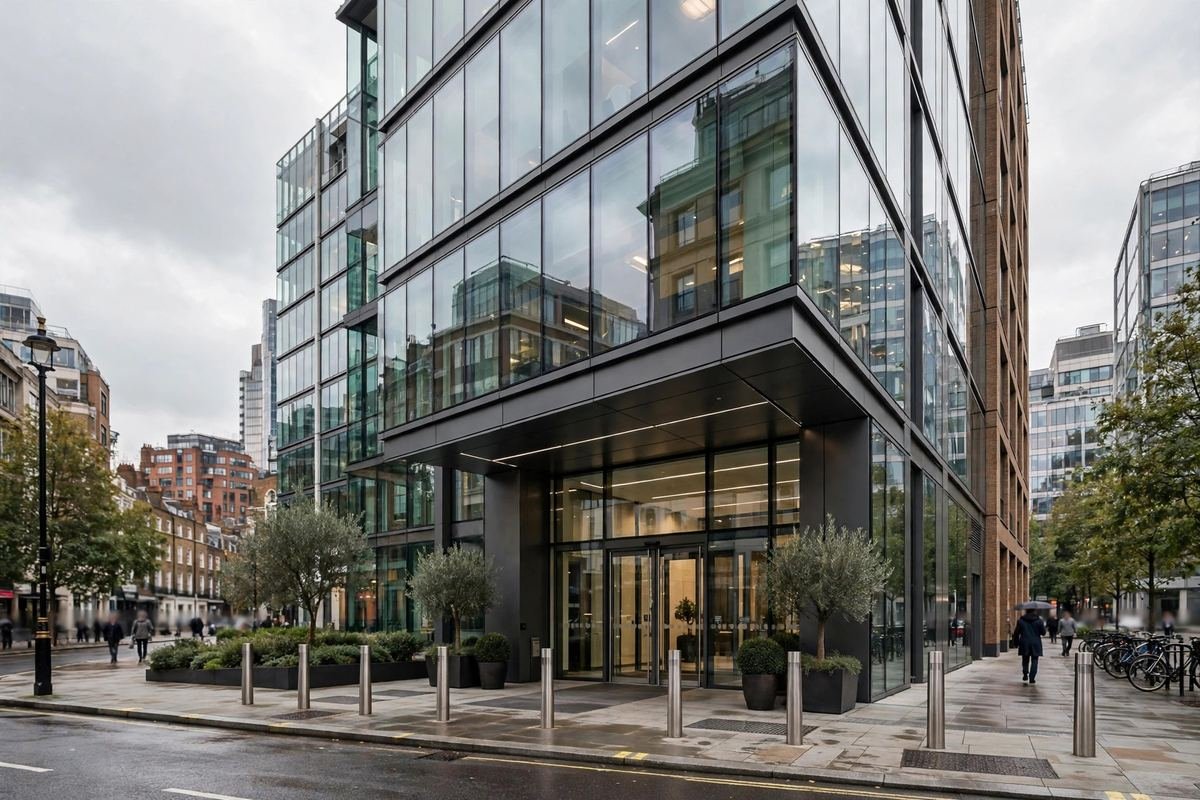
France outsourced its UK visa processing to TLScontact years ago. You do not walk into the French consulate with a folder. The route is: complete the application on the official France-Visas website, book an appointment at a TLScontact centre, and attend in person with your documents and biometrics.
TLScontact runs France centres in three UK cities: London, Manchester and Edinburgh. London handles the heaviest volume and its appointment slots go fastest, especially before school holidays and the summer season. Book as early as the system allows: you can apply up to six months before your travel date, and for France that head start is genuinely useful.
For a France Schengen visa from UK residents, the process always starts on the France-Visas website, never at the TLScontact desk.
At the appointment, TLScontact staff check your file for completeness, take your fingerprints and photo, and forward everything to the consulate for the decision. They do not decide your visa. Their job is intake, so a perfectly organised file still needs to convince the consular officer who reads it afterwards.
The France document checklist, item by item

France follows the Schengen Visa Code, then adds its own expectations. Here is the full list as enforced at the UK centres in 2026.
Passport. Issued within the last ten years, valid at least three months beyond your planned return from the Schengen area, with two blank pages. If your passport is running out, renew it before you apply; a passport that barely meets the validity rule invites extra scrutiny.
UK residence proof. Your eVisa status via a UKVI share code, or your residence documentation. Since physical BRP cards were retired at the end of 2024, France accepts the eVisa printout and share code. Make sure the share code is freshly generated, not one printed months ago, because they expire.
Application form. Completed online through France-Visas, printed and signed. The online form generates a registration receipt you must bring. Fill it in carefully: the answers on this form are what the officer compares against your supporting documents.
Photographs. Two recent photos meeting Schengen biometric standards, taken within the last six months. France is picky about these at the intake desk, so use a proper photo booth or studio rather than a home print.
Travel insurance. Minimum €30,000 medical cover valid across all Schengen states for the full trip, including emergency repatriation. The certificate must show your name, the coverage amount and the dates. Annual multi-trip policies are accepted if the certificate states the cover clearly.
Flight reservation. A return flight reservation with a live booking reference in your name. As we explain in our guide to Schengen visa agents, France accepts reservations rather than paid tickets, but the dates must match your accommodation exactly. A France Schengen visa from UK file with mismatched flight and hotel dates invites extra scrutiny, so cross-check them before you print.
Accommodation proof. Hotel bookings for every night, or an invitation from a host in France. This is where France differs from some neighbours: if you are staying with family or friends, France often wants an attestation d’accueil, an official hospitality certificate your host obtains from their local town hall (mairie). A casual invitation letter is frequently not enough for France.
Ask your host to arrange the attestation well in advance, because some mairies take weeks.
Proof of funds. Bank statements for the last three months plus evidence of income. France works to roughly €65 per day of stay, so a ten-day trip means showing around €650 plus a comfortable buffer. Officers look at the pattern, not just the final balance: regular salary credits and stable spending beat a large lump sum deposited last week.
Employment or status proof. An employer letter confirming your job, salary and approved leave, or the equivalent for students (university letter) and the self-employed (business registration and tax records).
Cover letter. A short letter explaining who you are, why you are visiting France, your itinerary, and your ties to the UK. Keep it to one page. Officers read hundreds of these, and clarity beats length.
France vs the generic Schengen checklist: what is actually different

Most guides treat every Schengen country the same. They are not. The table below shows where France tightens the screws compared with the baseline.
| Requirement | Standard Schengen | France in practice |
|---|---|---|
| Host invitation | Letter often enough | Attestation d’accueil often required |
| Daily funds guide | Varies by country | Around €65 per day |
| Application centre | VFS or BLS usually | TLScontact only |
| Form system | Paper or portal | France-Visas online, receipt required |
| Photo strictness | Standard checks | Notably strict at intake |
The practical takeaway: a file prepared for Spain or Italy and then submitted to France will usually survive, but the attestation d’accueil and the funds pattern are the two places French officers most often push back. Get those right and the rest is standard. For a France Schengen visa from UK residents, the attestation d’accueil and the funds pattern are where applications are won or lost.
Fees and processing time

The consular fee for a France Schengen visa from UK applicants is €90 for adults and €45 for children aged 6 to 11; under-6s are free. TLScontact adds its own service fee on top, payable when you book the appointment. Both fees are non-refundable whatever the outcome, so the file needs to be right the first time.
Standard processing is 15 calendar days from the day the consulate receives your file, and it can stretch during peak periods. Apply early. The six-month window exists for a reason, and French summer slots at TLScontact London are the first to fill.
If you are travelling in July or August, a spring appointment is the sensible move.
The refusal patterns we see on French applications
France refuses files for the same core reasons as everyone else, but the emphasis differs. In our experience, the most common French refusal triggers are weak proof of accommodation (the missing attestation d’accueil), funds that look fine on paper but show no stable income pattern, and itineraries where the applicant claims France as the main destination while spending most nights elsewhere.
The “intention to leave” refusal is the one that stings, because it feels subjective. For France, the best defence is concrete UK ties presented plainly: a stable job with approved leave dates, a tenancy or mortgage, family in the UK. Do not write three pages about how much you love Paris.
Show the officer your life is in Britain and the trip is a holiday, not an exit plan.
If you are refused, read our common questions page and get advice before reapplying. A second application that fixes the exact ticked grounds has a strong chance; a second application that ignores them does not. And remember that no agency, including Tripzo, can guarantee approval.
Anyone who promises that is not being straight with you.
Applying with family or as a couple
France processes each applicant individually, including children, and each person needs their own appointment slot at TLScontact. That catches families out: you cannot submit one file for four people in a single slot. Book the slots back to back on the same day so the family is seen together.
Each France Schengen visa from UK family member still needs their own complete documents, even when the appointments run back to back.
For couples where one partner is a British citizen and the other needs a visa, the British partner’s passport copy and proof of the relationship strengthen the file. It shows shared travel plans and shared finances, which officers like. If you are married, include the marriage certificate.
If you are not, joint tenancy agreements or joint bank statements do the same job.
Children need a birth certificate, both parents’ passport copies, and if only one parent is travelling, a signed consent letter from the other parent. France checks this carefully. An incomplete child file can delay the whole family’s decision, so prepare the children’s documents first and build the adults’ files around them.
Frequently asked questions
How long does a France Schengen visa from UK take to process?
The standard is 15 calendar days once the consulate has your file, but allow longer in peak season. TLScontact intake adds a day or two on either side. For summer travel, apply two to three months ahead rather than cutting it fine.
Can I apply for a France Schengen visa from UK if I live in Scotland?
Yes. TLScontact has a centre in Edinburgh for France applications, so you do not need to travel to London. The documents and fees are identical; only the appointment location changes.
Do I need an attestation d’accueil if I am staying in a hotel?
No. The attestation is only for stays with a private host in France. Hotel bookings covering every night are sufficient on their own. The attestation becomes relevant when a friend or relative is hosting you.
Is €65 per day a strict rule for France?
It is a guideline officers use, not a published legal threshold. What matters more is the pattern: steady income, a healthy balance relative to the trip length, and no suspicious last-minute deposits. Showing well above the guideline never hurts.
Can I visit other Schengen countries on a French visa?
Yes. A France-issued Schengen visa lets you travel throughout the Schengen area. France should genuinely be your main destination (most nights), but side trips to neighbouring countries are completely normal and expected.
What happens if my France visa is refused?
You receive a standard refusal letter with the grounds ticked. You can reapply once you have fixed the stated problems, or appeal within the deadline on the letter. In most cases a corrected fresh application is faster than an appeal. Get your file reviewed before the second attempt.
Planning a France trip? Let us build your file the French way
France rewards thorough, well-ordered applications and punishes sloppy ones more than most consulates. Before you book your TLScontact slot, let us check your France Schengen visa from UK documents against the French checklist: attestation, funds pattern, insurance wording and all. Contact Tripzo and we will get your France file appointment-ready.
Sources and further reading: france-visas.gouv.fr for the official application portal, GOV.UK foreign travel advice for France for entry requirements, and the Tripzo homepage for an overview of our services.
Editorial Verification Guarantee
Every guide published on Tripzo is cross referenced against sovereign European consular policies, VFS Global protocols, and the official Schengen Borders Code. We update instructions regularly to protect UK applicants from avoidable administrative refusals.
About the Author: James

Direct Support Line
Have an urgent question regarding your upcoming appointment date or document validity?